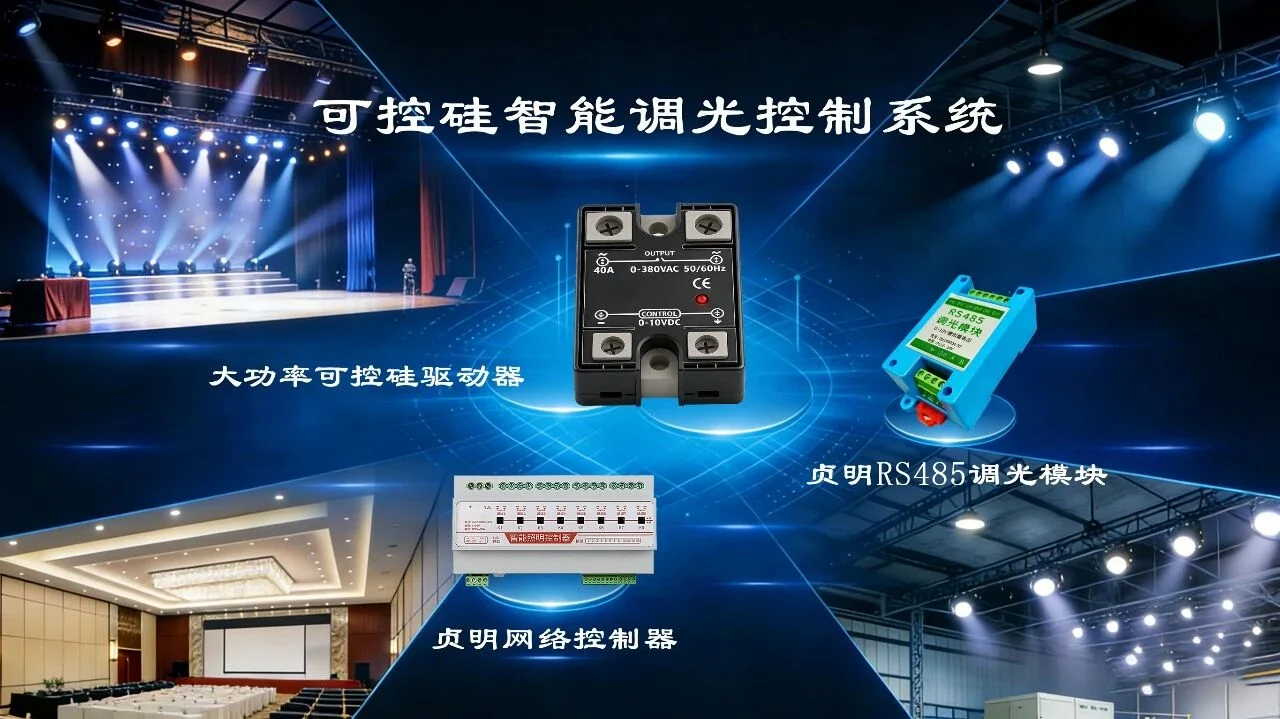
ZMSR0004-1G generates four 0-10V dimming control signals. An external TRIAC power driver regulates the AC lighting load, while a Zhenming network controller and IoT platform can add circuit switching, scenes, schedules and remote operations.
AC power stageExternal driver selected for the field load.
Remote operationPlatform and mobile management when networked.
Control Signal and Power Stage Are Separate
The architecture separates low-voltage dimming commands from high-power AC regulation. This keeps product responsibilities clear and allows the external driver, heat dissipation and protection to be selected for the actual circuit.
1. Control commandA computer, platform or local controller issues the requested brightness.
2. 0-10V outputZMSR0004-1G converts RS485 commands into four analog control outputs.
3. Power regulationThe external TRIAC driver regulates the connected compatible AC lighting circuit.
4. Scene operationRelay switching, dimming, schedules and logs are organized for each area.
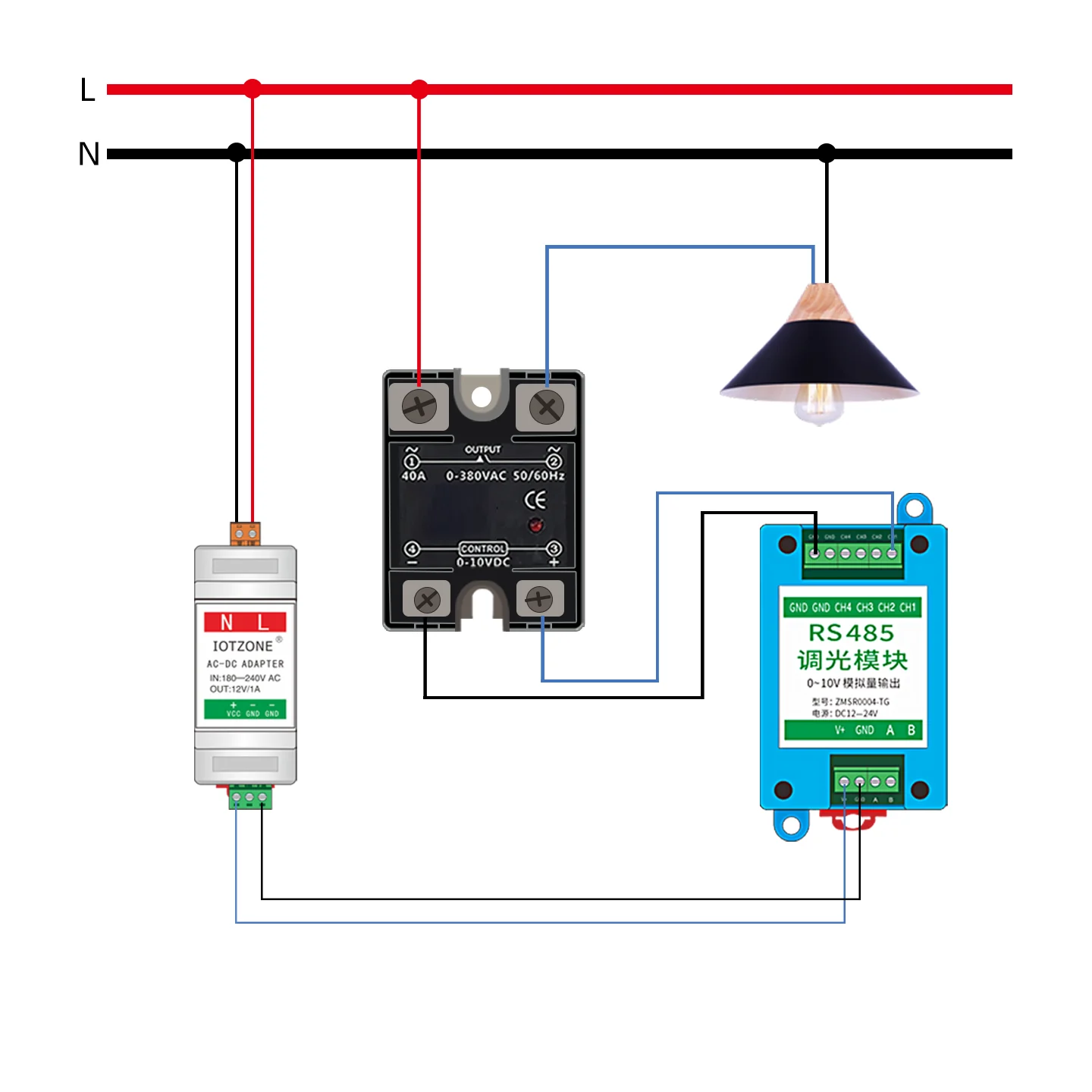
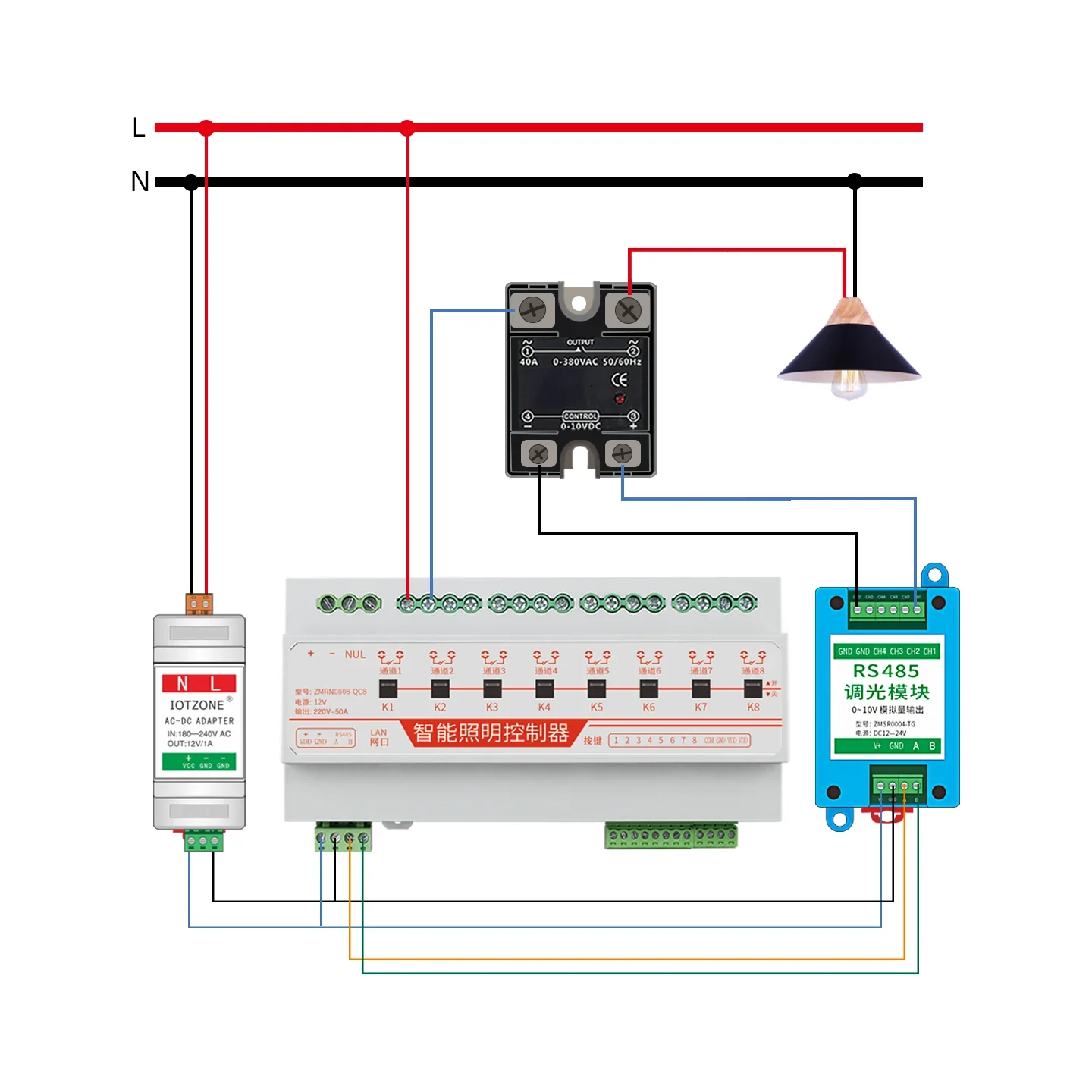
ZMSR0004-1G sends a 0-10V control signal; the external power driver connects to the AC supply and compatible lamp.
Networked Lighting Control
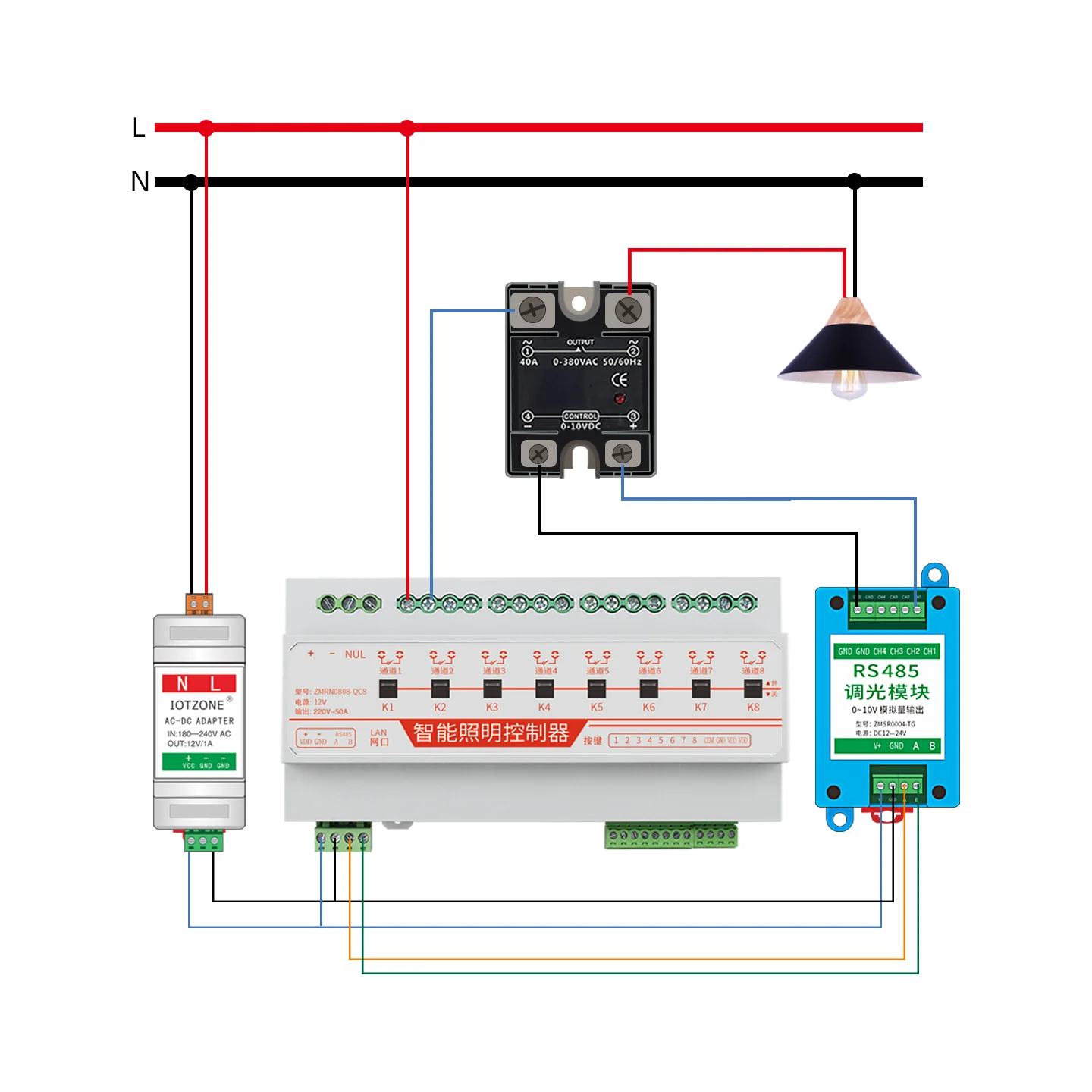
QC8 can manage network access and circuit switching; the dimming module and driver regulate brightness.
From one circuit to a managed scene
The system can combine relay power control, brightness levels, local panels, schedules and platform permissions. Typical scenes include opening, presentation, screening, event, cleaning, duty and closing modes.
Stages, cinemas and studiosCoordinate entry, screening, performance, intermission and cleaning light levels with other circuits.
Hotels and commercial spacesManage compatible lighting by area, business period and atmosphere with local and remote control.
Conference and lecture hallsBuild presentation, projection, discussion and break scenes around multiple dimming channels.
Factories and large spacesCombine zoned brightness regulation, circuit switching and energy acquisition for compatible lighting.
Load Compatibility and Selection
Incandescent and halogen lamps are typical resistive dimming loads. LED lamps require a driver explicitly designed for TRIAC dimming. Actual performance depends on the lamp driver, minimum load, dimming range, external power driver and field electrical design.
Compatible lamp firstConfirm that the LED product or driver supports TRIAC phase-cut dimming.
Driver rating by circuitSelect voltage, current, heat dissipation and protection for each field circuit.
Commission the rangeSet practical minimum and maximum brightness according to lamp behavior.
Select control signals and power drivers separately
ZMSR0004-1G provides four 0–10 V control signals, while external TRIAC power drivers match compatible lighting or heating loads. Check supply, interface and capacity separately for the control module, driver and load; a relay controller can provide main-power switching and connectivity. This separates low-voltage signals from power execution and supports expansion by dimming circuit.
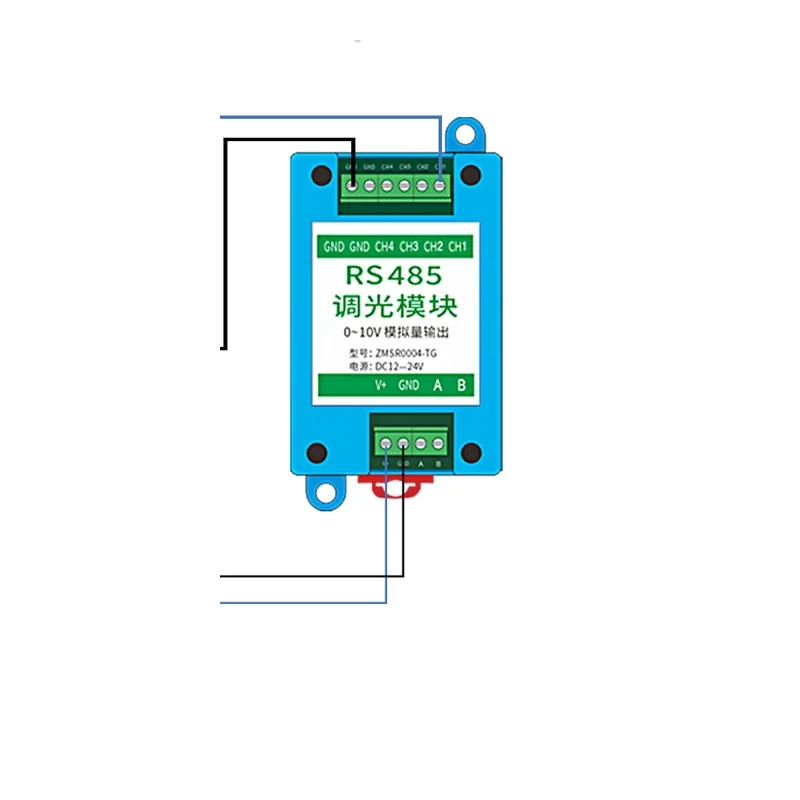
ZMSR0004-1G four-channel 0–10 V output module and terminals
02
Use distinct objectives for lighting and livestock heating
Cinema, exhibit and landscape lighting follow scene brightness and use periods; livestock heating follows temperature needs, growth stage and equipment arrangements. The output provides a variable control signal, with sensors and the platform coordinated where configured and local operation retained. Keep load parameters and circuit names distinct so maintenance can distinguish lighting adjustments from heating management.
QC8, 0–10 V module, external TRIAC driver and lighting wiring
03
Verify minimum output, off state and recovery together
Test a representative fixture or heater with its driver for minimum output, continuous adjustment, off behaviour and power recovery before extending to multiple circuits. Plan signal, supply and load wiring together with identifiers tied to the point register. Retain output changes and field feedback, and recheck compatibility after driver or load replacement so the usable adjustment range remains appropriate.
Selection questions
Can the 0–10 V module directly carry a high-power lamp?
It supplies the control signal. A matched driver and execution circuit handle the power, selected around the load and interface.
Are all LED fixtures suitable for TRIAC dimming?
The fixture or driver must support that method. Verify minimum output, off state and adjustment behaviour with a representative load.
Frequently Asked Questions
Does ZMSR0004-1G drive high-power lamps directly?No. It provides four 0-10V control outputs. The external TRIAC power driver carries and regulates the AC lighting load.
Can every LED lamp use TRIAC dimming?No. The LED lamp or driver must explicitly support TRIAC dimming. Minimum load, dimming range and driver compatibility must be considered during selection.
How is the external power driver selected?Select it according to the AC supply, lamp type, circuit current, heat dissipation and protection requirements. Its load rating is separate from the ZMSR0004-1G control output.
Can the system be controlled from a computer or mobile device?Yes. The module supports RS485 control and can be combined with a Zhenming network controller and IoT platform for computer and mobile operations.
Can relay switching and brightness control work together?Yes. A ZMRN0808-QC8 or another suitable relay controller can manage circuit power and other equipment, while ZMSR0004-1G and the external driver regulate brightness.
Plan a dimming system around the actual lamps and circuits
Zhenming Electronics can support module selection, controller combination, platform access and project integration.